Mr. Morton
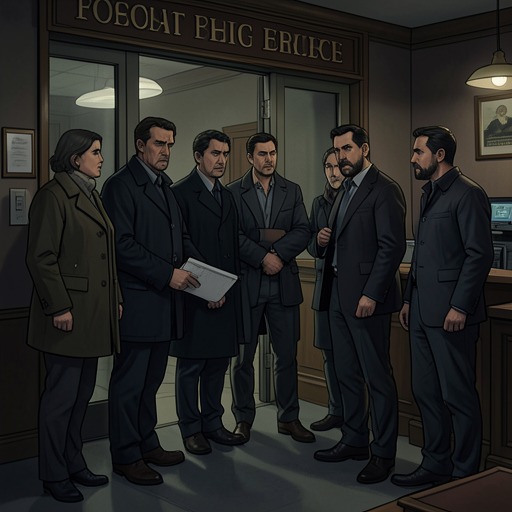
American WomanMr. Morton is a grocery-store owner in Monticello, in New York State, whose killing becomes a decisive moral reckoning for Jenny and the surviving members of the revolutionary group. Before the robbery, they discuss him as a small man who can be made to hand over a bank deposit. Afterward, Jenny struggles to see him as more than a name attached to the consequences of their flight. The contrast between those views gives his limited but pivotal role its force: the group’s practical plan turns a person into an obstacle, while his death makes that abstraction increasingly difficult to sustain.
Identity and Place in the Community
Mr. Morton owns the grocery store where Thomas works. Thomas describes him as a nice man, and the narrative later presents him as someone who calls out to a favorite employee as he leaves the store. These details place him within ordinary relationships and routines, rather than within the political conflict that will overtake him. His store also provides a connection between the group and the local community: its owner makes deposits at a bank on Main Street, a fact that the group turns into operational intelligence.
The plan depends on Mr. Morton’s habits and apparent vulnerability. Juan tells Jenny that the owner makes the deposit alone and describes him as very small; Juan and Yvonne have checked him out. The group’s assessment is bluntly practical, reducing a local shopkeeper to a predictable route, a deposit, and a person they expect to control. At the same time, Thomas’s account that Mr. Morton deposits at the bank up here, despite the existence of the store farther away, makes the routine sound like an ordinary business arrangement rather than a secret or a provocation. The banality of the detail is part of what makes its later consequences so stark.
The Robbery Plan and Encounter
When Juan reveals the plan to Jenny, he says the group will rob the bank deposit on Sunday and insists that Thomas will not be involved or affected. The proposed target is not the bank itself but Mr. Morton as he carries money to the drop safe on Main Street. Juan expects the owner to comply when approached. Jenny immediately objects, but the group has already discussed the operation and settled on it through a council vote. Mr. Morton is thus introduced into the story through an argument over the group’s decision-making: the people planning to take his money have framed their secrecy as responsibility to Jenny, while she is left reacting to a plan already formed.
Yvonne’s approach is designed to make the encounter appear familiar. She plans to wear a powder-blue dress and light coat, present herself as Sandra, a former check-out employee visiting home, and take Mr. Morton’s arm. He recognizes the assumed name only uncertainly; while she urges him to keep walking and adds that she is engaged, he feels a hard object at his back. The staged friendliness and the concealed threat operate together. Mr. Morton is not shown knowingly participating in the group’s politics or understanding its larger circumstances; the plan relies instead on his recognition of a supposed acquaintance and his limited ability to perceive what is happening.
Death and the Return of Particularity
The later account identifies Mr. Morton as the grocery-store owner murdered in Monticello. Pauline names Jenny as an accessory, and a newspaper article also names Juan and Yvonne and reports the make of the gun. The supplied scenes do not establish precisely who fired or describe the moment of death. They do establish that the planned robbery ends in a killing, transforming Juan’s confident expectation of an uncomplicated handover into a lasting consequence for the group.
For the four fugitives, that consequence first settles into layers of fear, remorse, and rationalization. They wonder whether they were victims of Juan and Yvonne, then whether all of them, including Juan, were victims of larger circumstances; their explanations widen until they reach government persecution, capitalism, and the history of imperial violence. The narrative records the pull of these arguments without letting them erase the death at their center. Mr. Morton is initially only an honorific and a pale surname to them, a figure they feel they know because they need him to serve their punishment and possible redemption. The recognition that they have not truly known him is itself part of the aftermath.
Jenny’s Reassessment and Narrative Significance
Jenny’s later reflection revises the moral story she has told herself about political violence. She had believed that her high intentions and careful choices distinguished her earlier bombings from violence she condemned. Looking back, she recognizes that luck, not righteousness, may have kept her from killing someone. In that changed understanding, Mr. Morton’s death appears not as proof of Juan’s impure motives alone but as bad luck with an actual victim. That distinction does not absolve the group: it exposes how easily the language of intention and circumstance can obscure the person harmed.
The narrative eventually gives Mr. Morton a specificity absent from the robbery plan. Jenny imagines him adjusting his outdated glasses and squinting back through the store doors, in a world made watery and imprecise by a prescription he has stretched beyond its usefulness. She sees him taking a young woman calling his name for someone familiar, and only slowly grasping that the object she presents is a gun. This remembered image replaces the group’s earlier calculation of a small man with a deposit to make with a person whose ordinary limitations and trust have been drawn into their escape. Mr. Morton’s narrative importance lies in that return from abstraction: his death forces Jenny to confront the gap between a just cause and the uncertain, damaging results of acting in its name.